
Human Centric Automatic Piano Music Transcription
Despite the many advances in the field of music information retrieval, automatic piano music transcription remains a difficult task. This is because the best available algorithms do not yet achieve results comparable to those of a skilled musician, and they often produce errors that are difficult to understand. This is especially true for songs with complex rhythms or unfamiliar styles. Furthermore, transcription is not a trivial process as it requires accurate timing and alignment of notes in relation to underlying beats or bars. Finally, the overall structure of the musical piece like verses and choruses needs to be correctly transcribed as well.
This can be very difficult for a computer, even if the individual notes and their timing are correct. It is because there are various global characteristics of a musical composition that cannot be captured by the local musical statistics considered in the transcription model.
For example, rhythms can be hard to transcribe because they depend on multiple factors such as the tempo of the song, the beats and measures per bar, the time signature of the piece, and other factors that must be accounted for when determining note onsets and offsets. In addition, identifying the number of beats and measures in a measure can be very difficult, as can deciding how long each note should be played for.
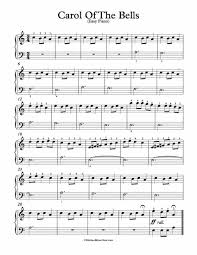
Moving Towards a Human Centric Automatic Piano Music Transcription
In order to address these problems, several studies have attempted to develop models that can automatically transcribe a piece of music into a standard musical score. These models typically take a recording of the audio of the piece and convert it into MIDI files. The resulting MIDI file contains an encoded record of the pitch and duration of each note, along with other information such as dynamics and articulations. The MIDI file is then segmented into a series of individual frames which represent the different musical notes, and is converted into a piano roll using specialized piano software.
Many of these models use a sequence-to-sequence transfer learning algorithm, which has been shown to be successful in other applications of machine learning such as natural language processing. Moreover, the recent advances in deep learning offer great promise for improving music transcription performance.
Piano transcription is especially challenging because of the unique timbres and playing techniques associated with this instrument. Furthermore, there are variations in the pitches and frequency ranges of each individual note which can significantly impact the accuracy of a transcription. Consequently, several research efforts have been dedicated to developing models that can automatically transcribe piano recordings.
These models generally work by iteratively detecting and marking the frequencies of each note, using an attention mechanism to track each frame, and utilizing convolutional neural networks for feature detection. In addition, some systems have been developed to transcribe a wider variety of instruments such as guitars, violins and flutes. Moreover, some systems have been developed that can even transcribe the notes of a singing voice into sheet music. This allows singers to self check their own performance and is ideal for enhancing the ability of amateur musicians to practice on their own.

