
automated machines aid in Flexible printed circuit board
Using automated machines aids in the flexible printed circuit board process by reducing human errors. This is an essential part of the design and assembly process, since errors can result in costly repairs. Automated machines can efficiently detect errors such as mispositioned components and improper soldering. They can also be used to check the quality of the copper and metallization, as well as verify the thickness of solder.
Printed circuit boards are the backbone of many electronic devices. A flexible PCB is a small, thin, lightweight, and portable component that provides the necessary electrical connections for a product. These are designed to fit into tight spaces that aren’t possible with rigid circuit boards. These are often used in wearable devices, portable consumer electronics, and smartphones. In addition, they are used in medical and aerospace applications for their lightweight, streamlined designs.
A flexible printed circuit board is made up of a polyimide substrate layer cladded with rolled copper, similar to the prepreg found in rigid PCBs. These layers are then etched to isolate the conductors, which are then protected with a layer of solder mask and silk screen. For added durability, manufacturers can laminate a stiffer material to the flex circuit to give it some rigidity.
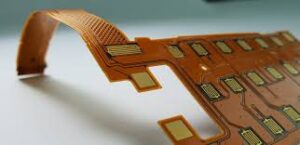
How do automated machines aid in Flexible printed circuit board?
The flexibility of a flex circuit allows it to be manipulated in three dimensions during installation, a feature not available with rigid circuit boards. This helps solve space and weight issues, especially in tighter areas, as well as allow for better airflow. This is particularly important in electronic products, such as mobile phones and tablets, that are frequently flipped and folded.
Flex circuits are a cost-efficient alternative to traditional wire harnesses and rigid circuit boards. They can be made thinner and lighter than rigid circuit boards, and provide a more compact form factor with fewer mechanical connectors. They also offer more freedom of movement, a wide operating temperature range, more robust signal quality and impedance control, and better reliability.
Compared to traditional wire harnesses, flex circuits can provide significant savings in assembly time and costs by eliminating the need for routing and wrapping individual wires. They can also be used to replace metal wires, which are more expensive and bulkier than flexible circuits. These advantages make them a popular choice for consumer electronics, automotive, medical and aerospace applications.
In the past, manual sensor bonding was a labor-intensive process that yielded too much variability in part positioning. However, with the introduction of automated machine technology, the production and assembly of a headset that requires 32 different sensors has become significantly faster and more reliable. This new technique has eliminated the need for a technician to manually remove, prepare and align each individual sensor and place it on its respective mounting location within the headset.
In the future, it is likely that more manufacturers will switch to using a flex circuit in their product design. The technology will continue to evolve, making it more aesthetically appealing and practical for a variety of applications. For example, it may be used to replace mechanical connectors in LED strips, and can be incorporated into portable electronics, such as a smart watch.


