
Reflow Oven in PCB Assembly and Manufacturing
A reflow oven is a machine used for the reflow soldering of surface mount components on printed circuit boards. For commercial high-volume use, reflow ovens take the form of long tunnels with conveyor belts along which PCBs travel. For prototype and rework use, smaller ovens are available.
The reflow process is generally more effective and cost-efficient than wave soldering for circuits with a mix of through-hole (THT) and surface mount components. Reflow is also generally preferred for densely populated double-sided assemblies.
Reflow ovens operate on the principle of heat transfer through convection and conduction. In addition, they typically provide an environment with low oxygen levels to prevent corrosion of electrical components and oxidation of the PCB’s surface layer. The temperature of a reflow oven can be controlled to produce thermal profiles that are optimized for the specific product design, solder paste type and other assembly requirements. These thermal profiles are described by a set of parameters that include ramp, soak and spike temperatures.
During the preheating phase, the oven slowly raises the temperature of the pcb assembly and manufacturing to avoid thermal shock and damage to the surface mounted components. Then the board enters the soaking phase at the target temperature for 60 to 120 seconds to ensure that all areas of the assembly are heated uniformly and to activate chemicals in the solder paste that prevent it from solidifying into microbeads during the reflow process. The final stage of the reflow process is the peak or spike temperature at which the solder paste melts to create the bond between the component and the circuit board.
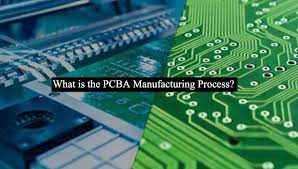
The Role of a Reflow Oven in PCB Assembly and Manufacturing
After the reflow stage, the PCB is cooled to ambient temperature. This is necessary to protect the electrical components and ensure that the solder joints have a sufficient strength to endure the mechanical stresses of normal operation. Ideally, the cooling rate should not exceed 3oC per second.
A reflow oven should be equipped with temperature control and monitoring capabilities to ensure that it meets the quality standards required for high-volume manufacturing. These controls should be easily programmable to accommodate different products. The oven should also be capable of detecting and correcting common problems, such as mis-alignment of the PCB, improper positioning of components or excessive temperature variation.
A good reflow oven will enable the manufacture of PCBs that meet the highest quality standards with the minimum amount of effort. This includes providing a reliable means of attaching both surface mount and through-hole components. To accomplish this, the process engineer must understand all aspects of the product design, including the component layout and size, the reflow oven specifications and the required thermal profile.
In addition, the engineer should have access to tools that will allow him to evaluate the actual performance of the reflow oven in terms of its accuracy, repeatability, and reproducibility. This evaluation and qualification will help to identify any potential defects and to optimize the reflow process. The results of this optimization will help to avoid costly production problems such as tombstoning, de-lamination, or poor bonding.


