
Biggest Challenges of Being a Piano Transcriber
Imagine that you are a talented pianist who gets asked to play a piece of music at a wedding ceremony. But the musical score for this particular piece of music is nowhere to be found, either online or in stores, and nobody you know is able to musically transcribe it for you. This is a common situation for musicians who do transcription work, particularly for certain music genres like jazz improvisations or soundtracks for video games.
Basically, musical transcription is the process of taking a recorded performance and turning it into sheet music. This involves a rigorously trained expert listening to the performance and then painstakingly creating an accurate representation of it on paper or other digital format. It’s a demanding skill that can be extremely time consuming, especially when transcribing music with a lot of fast notes or a complex rhythm.
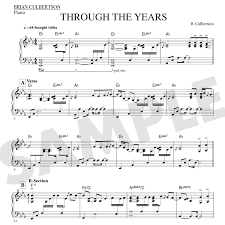
To transcribe music accurately, you have to have a lot of different skills. In addition to having an excellent ear, you also need to be able to understand and write standard musical notation, which is the universal language of piano music. This includes knowing the length of time that each note should be held, as well as the position on the staff where it should be played. You’ll also need to be able to think quickly and make decisions on the fly to keep up with the pace of the recording you are working from.
https://tartalover.net/nicole-pesce
Three Biggest Challenges of Being a Piano Transcriber
As you can imagine, this is a very difficult thing to do well, even for the most talented musicians. For this reason, most musicians who do transcription work do so as a sideline to their main creative endeavors and rarely work exclusively as transcribers. Even when they do, it’s often not enough to support them financially on their own.
https://m.youtube.com/@tartalover2682/videos
One of the biggest challenges of being a pianist transcriber is simply getting motivated to spend hours listening to and practicing complex recordings. It’s easy to get discouraged if you can’t immediately start producing accurate and beautiful musical notation, so it’s important to take it slowly and steadily. Try to practice a little bit each day and focus on a few short sections of the music at a time.
As you progress, you’ll find it easier and easier to transcribe music by ear. But don’t be tempted to skip this step in order to move on to the more exciting and creative parts of the process. It’s still very important to spend the time to train your ears so that you can create accurate transcriptions, no matter how interesting or complicated the music may be. With a little persistence, you can learn to transcribe anything, from the simplest Bob Marley solos to the most intricate classical pieces. The key is to break the process down into manageable chunks and always have a clear purpose in mind. This will help you stay focused and avoid getting discouraged by the difficulty of a particular recording.

