
Thermal Properties of a PCB Board Maker
Your circuit board can take on all kinds of thermal stress and power consumption, so the thermal properties of your PCB substrate and copper conductors are key to your board’s success. They determine temperature rise (particularly in sensitive components), the rate at which heat diffuses away from conductors and the overall efficiency of your board.
Thermal stability is the maximum temperature that a PCB can be exposed to without breaking down or degrading at an appreciable rate. This is determined by a combination of factors, including the CTE (coefficient of thermal expansion), Tg (glass transition temperature) and thermal conductivity of your PCB material. These are important because your PCB will likely be subjected to many cycles of heating and cooling in use, and the stability of your board is crucial.
Generally, FR4 is used as the base material for pcb board maker, and the conductive copper layers are plated on top of it. While this is a very robust material, it has relatively low thermal conductivity. In order to improve thermal performance, alternative PCB materials such as ceramics or metal cores are used. The latter offer far better thermal properties than FR4, and the presence of metal provides a path for heat to dissipate effectively.
To improve a material’s thermal conductivity, it needs to be free of moisture and other impurities. Moisture interferes with the flow of electrons through a material, which reduces its conductivity. Ideally, you want your conductive copper to be as dry as possible. Moisture also interferes with the cure of epoxy-based resin systems, which can impede the formation of a solid bond between your copper and the base layer.
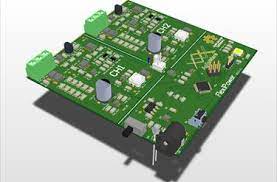
What Are the Thermal Properties of a PCB Board Maker?
For these reasons, it’s best to keep your PCB material as dry as possible. Drying your inner layers after conveyorized oxide replacement is essential for a successful PCB. In addition, baking your inner layers after the final coat of epoxy will further improve their thermal properties.
Besides improving the thermal conductivity of your PCB, using thicker copper traces can also help with temperature control. Thicker traces have a lower temperature rise and can carry more current for the same operating temperature. They also have the advantage of reducing thermal resistance because they disperse heat more evenly throughout your board. This is especially beneficial for high-power applications. A thinner trace will experience a greater temperature rise and will be less capable of dissipating the heat that is generated by your board’s component.
This can lead to overheating and other damage. Fortunately, there are ways to avoid this. Besides choosing the right PCB material, you can also place your most sensitive components where they will have the most direct access to a heat sink. By combining these strategies, you can achieve the best possible thermal management. This will minimize overheating, excessive temperature damage and increase your PCB’s endurance.
Utilize sealed enclosures or housings to shield PCBs from moisture ingress. Enclosures with gaskets or O-rings create a tight seal, preventing external moisture from penetrating the internal components. Choose enclosures with appropriate IP (Ingress Protection) ratings based on the environmental conditions where the PCB will be deployed.


