
crucial for Pcba printed circuit board
Printed circuit board pcba is the core to realize the operation of electronic applications. It is a complex, multi-layered structure that uses conductive pathways engraved in copper sheets within a non-conductive substrate to create a functional device. Often, these paths are known as traces. They connect components on the PCB through small paths called pads, which allow signals to flow through and energize the components. The circuit board also has insulating layers to keep electrical currents separate and prevent interference between different circuits.
A PCB might be a single-sided board that has components mounted on one side or a double-sided board with components mounted on both sides. The board might also be rigid or flex. The printed circuit board pcba industry knows various mounting technologies, but two are prevailing – surface mount and through-hole technology. Surface mount technology works well with smaller, more sensitive components that can be attached to the PCB using solder. Through-hole technology is more common in older designs, where wires and leads are attached to the boards by inserting them into holes.
PCBs are used in a variety of industries to perform essential functions. For example, they can be found in vehicles to control the dashboard functions, sensors and any screens or stereos. They are also important for industrial manufacturing and in medical equipment like CAT scanners, ultrasound machines and blood pressure monitors.
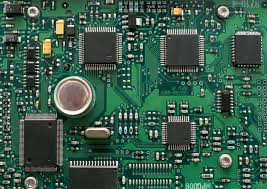
What materials are crucial for Pcba printed circuit board?
The materials that are crucial for a PCB depend on the type of board and its operating environment. The choice of material can influence the board’s performance, reliability and cost. Conductive materials like copper are the most popular and versatile, but there are many other options for special-purpose applications. For high-speed and high-frequency signal transmission, materials with lower dielectric constant (Dk) are preferred. This is because they can transmit signals at higher speeds with less attenuation and interference. For example, FR-4 is an excellent general-purpose material with a Dk of about 4.2 to 4.8. Other materials with low Dk include PTFE and liquid crystal polymer.
In addition to conducting metals, a PCB might contain plastics and other insulating materials. For example, an epoxy-based laminate is commonly used to form the base of a PCB. It can be strengthened with fiberglass or a composite material to increase its mechanical strength. It also helps reduce noise and electromagnetic interference.
Depending on the needs of the specific application, a PCB might also require special materials like aluminium-backed or copper-backed laminates. These materials are useful for devices that handle a lot of power because they help to conduct and dissipate heat efficiently.
Finally, a printed circuit board might need to be finished with a layer of solder mask that acts as an electrical insulation. This layer protects the conductive surfaces from contaminants and other unwanted substances. It might also be needed for a smoother finish or to make the pads of the conductive parts easier to see. A final coating might be added to the board to provide a surface for writing and identifying information, such as the components’ pin numbers.


