
circuit board assembly companies
Circuit board assembly companies utilize a variety of materials in the manufacturing and assembly of printed circuit boards (PCBs), each serving a specific purpose and contributing to the functionality and reliability of the final product. These materials range from substrates and conductive elements to soldering materials and protective coatings, all carefully selected to meet the requirements of the client’s project and the standards of the industry.
The primary material used in PCB fabrication is the substrate, which serves as the base for the PCB. The most common substrate material is fiberglass-reinforced epoxy laminate, known as FR-4. FR-4 offers excellent electrical insulation properties, mechanical strength, and dimensional stability, making it well-suited for a wide range of applications. Other substrate materials, such as polyimide and ceramic, may be used for specialized applications that require higher temperature resistance or flexibility.
Conductive materials, such as copper, are used to create the conductive pathways on the PCB, known as traces. Copper is preferred for its high electrical conductivity and corrosion resistance, allowing for efficient transmission of electrical signals across the board. The copper traces are typically applied to the substrate through a process called copper deposition, where a thin layer of copper is laminated onto the substrate surface.
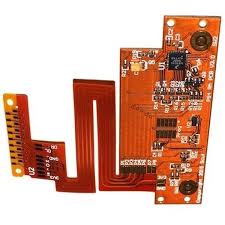
What materials are used in circuit board assembly companies?
Solder is another essential material used in circuit board assembly companies. Solder is a low-melting-point alloy typically composed of tin and lead, although lead-free alternatives are becoming increasingly common due to environmental and health concerns. Solder is used to create electrical connections between components and the PCB, forming strong and reliable joints that withstand the rigors of operation. Solder paste, a mixture of solder particles and flux, is applied to the pads on the PCB before components are mounted, facilitating the soldering process during assembly.
Protective coatings are applied to the PCB to safeguard against environmental factors such as moisture, dust, and corrosion. One common coating material is solder mask, a thin layer of polymer resin that is applied over the copper traces to prevent oxidation and short circuits. Solder mask also serves as a protective barrier during soldering and assembly processes. Other coating materials, such as conformal coatings and encapsulants, may be used to provide additional protection against humidity, temperature extremes, and mechanical stress.
Various types of components are used in circuit board assembly, each requiring specific materials for their construction. For example, passive components such as resistors, capacitors, and inductors are typically made from ceramic, tantalum, or polymer materials, depending on the desired electrical properties and performance characteristics. Active components such as integrated circuits (ICs) and transistors are fabricated using semiconductor materials such as silicon or gallium arsenide.
In summary, circuit board assembly companies rely on a diverse range of materials to manufacture and assemble printed circuit boards that meet the requirements of their clients and the standards of the industry. From substrate materials and conductive elements to soldering materials and protective coatings, each material plays a critical role in the functionality, reliability, and longevity of the final product. By carefully selecting and utilizing these materials, circuit board assembly companies ensure the production of high-quality PCBs that power a wide range of electronic devices in our modern world.


